
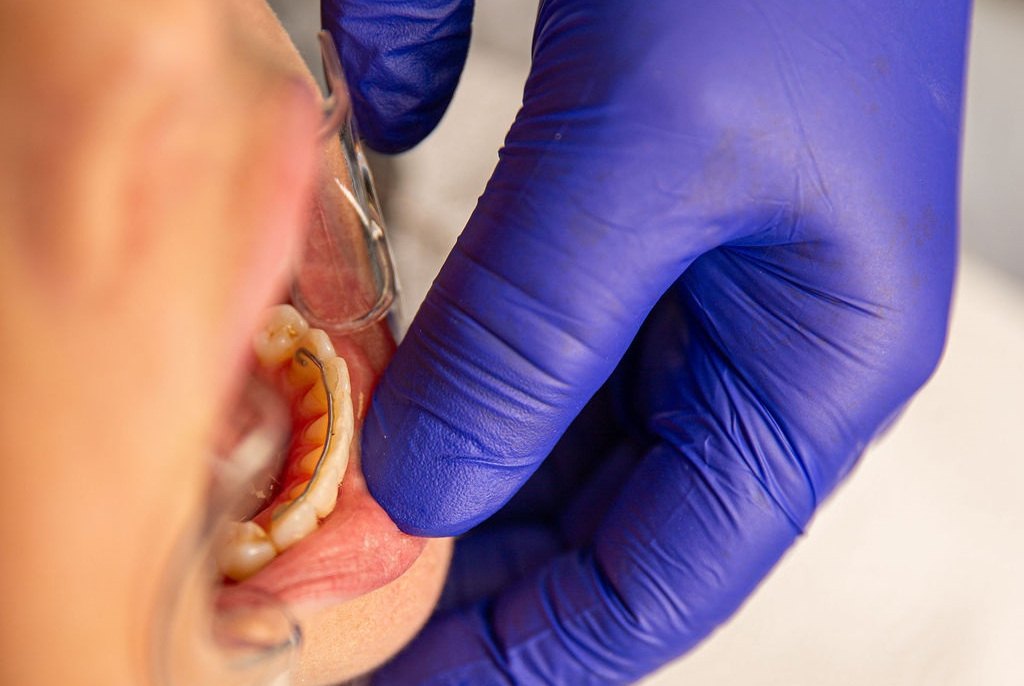
If you’ve ever met an adult whose teeth “moved back” after braces, you already know that orthodontic results aren’t automatically permanent. What you may not know is why it happens — and that the answer has less to do with whether someone wore their retainer and more to do with what was addressed during treatment in the first place.
This is something we’ve been thinking about at this practice for a long time. Long enough that we have data.
What the Research Actually Shows
In the 1970s, the University of Washington conducted a study on orthodontic stability. What they found was striking: roughly 70 percent of cases treated with one to two years of retention after braces showed unacceptable relapse. The teeth had moved back to a degree that most patients and parents would consider a failed result.
That study prompted us to change our approach. We moved to what we call long-term retention — a protocol that extends the retention phase well beyond the industry standard at the time. Then we repeated the University of Washington study using our own patient records.
The rate of unacceptable relapse in our patients: under 10 percent.
That gap — between 70 percent and under 10 percent — is not a small difference. It’s the difference between orthodontic treatment as a temporary fix and orthodontic treatment as a lasting investment. And it didn’t happen by accident. It happened because we took the question of long-term stability seriously when most of the field hadn’t yet.
Why Teeth Move Back
The short answer is that teeth are not fixed objects. They’re held in place by a system — bone, ligament, muscle, pressure, habit — and when treatment ends, that system doesn’t simply freeze in its new configuration. It keeps doing what it does. If the underlying conditions that caused the original problem haven’t been fully addressed, those conditions continue exerting pressure on the teeth long after the braces come off.
Tongue posture is one of the most underappreciated factors. The tongue is a powerful muscle that rests against the teeth for hours every day. If it isn’t positioned correctly — which is often related to the structural issues we discuss elsewhere on this site — it applies consistent pressure in directions that work against alignment. A retainer holds the teeth in place against that pressure. It doesn’t change the pressure.
Breathing patterns matter for similar reasons. A child who breathes primarily through their mouth engages a different set of muscles than one who breathes through the nose. Those muscles influence how the jaw develops and how stable the bite remains over time. Treating the teeth without addressing the breathing is treating part of the problem.
Growth is the third factor — and the one most specific to younger patients. The lower jaw continues developing into the late teens and, in some cases, the early twenties. For certain bite problems, that continued growth can work against the correction made during treatment. We account for this in how we plan treatment from the start, which sometimes means building in an intentional overcorrection.
Overcorrection — And Why We Do It
This is one of the places where our approach differs most visibly from what families sometimes experience elsewhere, and it’s worth explaining directly.
There are certain tooth movements that will relapse over time regardless of how well a patient wears their retainer. The biology of the situation guarantees some degree of change. Our response to this isn’t to pretend otherwise — it’s to correct slightly past the ideal endpoint during active treatment, so that when natural settling occurs, the teeth land where they should be.
The result is that some patients’ teeth don’t look perfect the day the braces come off. They look like they’re slightly overcorrected. This occasionally surprises families who were expecting a finished result at that appointment.
What we tell them is this: we’re not overly concerned with how the teeth look the day the braces come off. We care about how they look a year later, and five years later, and ten years later. An orthodontist who optimizes for the day of debanding is optimizing for the wrong moment. We’d rather the teeth look exactly right two years from now than spectacular today and disappointing by next summer.
What Long-Term Retention Actually Means
We are sometimes asked whether teeth need to be retained forever — whether patients should simply plan on wearing retainers indefinitely. Some practices advocate this position, and we understand the logic behind it. But we’ve found it impractical for a number of reasons that patients and families have raised with us over the years.
Orthodontists retire. Patients move. Retainers break and need replacing, at ongoing cost. Dentists and hygienists, who need to work around fixed retainers, are generally supportive of retainer wear for five to seven years — but their cooperation over a lifetime is less reliable. And frankly, the data doesn’t support the need in the majority of cases. Most patients, treated correctly and retained appropriately, achieve stable results without lifetime appliances.
What long-term retention means in practice is a protocol that’s meaningfully longer than the bare minimum — long enough to allow the bone and tissue around the teeth to fully consolidate, and long enough to account for the growth changes still occurring in younger patients. The specifics vary by case. Some bite problems, particularly in the lower front teeth, require longer retention than others. We’ll tell you what applies to your child’s situation and why.
What This Means If You’re Evaluating Orthodontic Care
Stability is not a given. It’s a result of how treatment is planned, how the underlying causes of the original problem are addressed, and how long the retention phase is managed. When you’re choosing an orthodontist, it’s a reasonable question to ask: what does your retention protocol look like, and what does your patient data show over the long term?
We’ve been asking that question of ourselves since the 1970s. The answer is the under-10-percent relapse rate we mentioned at the start — and a practice philosophy built around the idea that the end of active treatment is not the finish line.
We’re Happy to Walk You Through What This Looks Like for Your Child
Every case is different, and retention recommendations depend on what was treated, how, and at what age. If you’re currently in treatment with us, your retention plan is something we’ll discuss in detail before your braces come off — not after. If you’re evaluating your options and want to understand how we approach long-term stability, that’s exactly the kind of conversation we have at consultations.
Call any of our two offices or request an appointment online.
Stow: 330.688.8667
Green: 330.644.1033